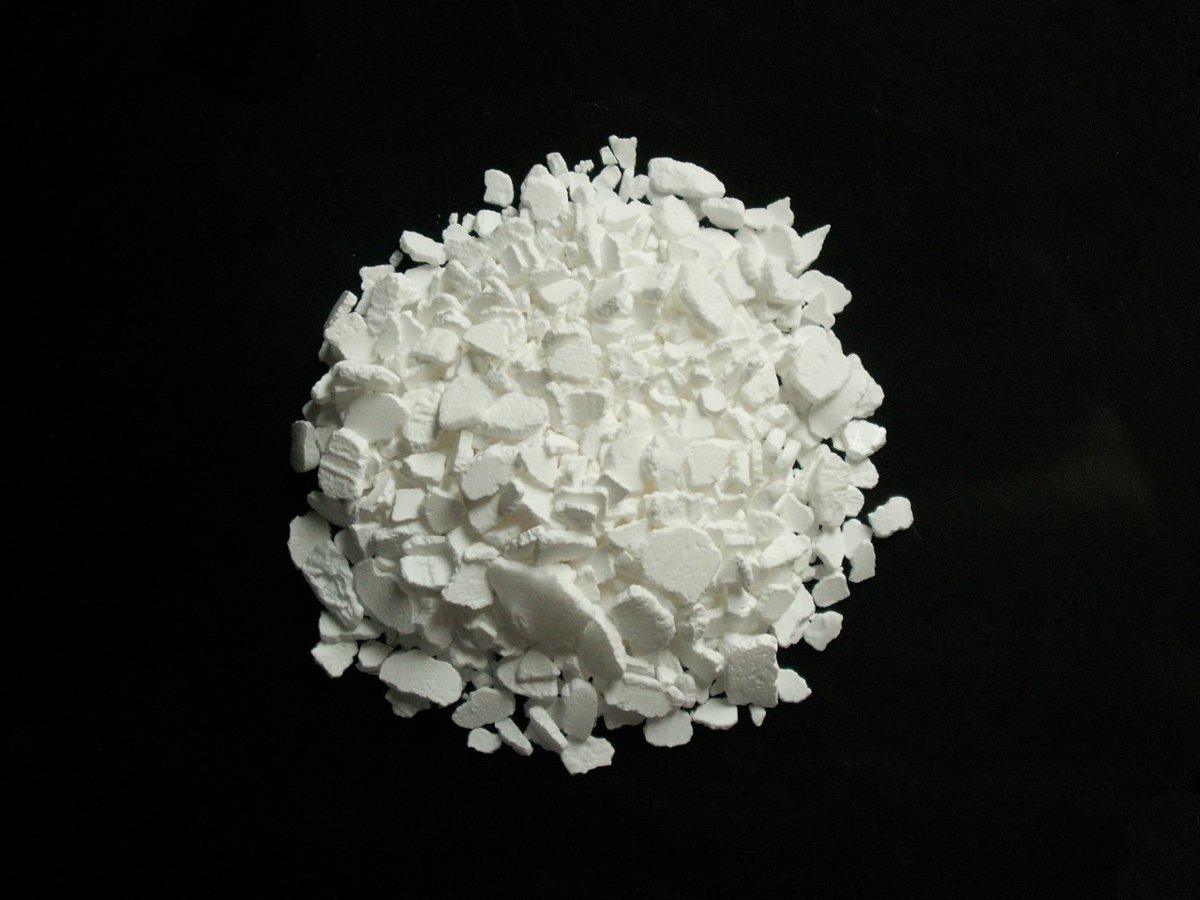
Product at a glance
- Formula
- CaCl₂
- CAS
- 10043-52-4
- Common forms
- Pellets, granules, flakes, lumps, or powder; confirm the offered form
- Buyer documents
- Verify the offered grade with TDS, SDS, and a batch COA
What Is Anhydrous Calcium Chloride?
Anhydrous calcium chloride is an inorganic salt with the formula CaCl₂ and CAS number 10043-52-4. It is commonly supplied as white or off-white pellets, granules, flakes, lumps, or powder. The material is highly hygroscopic, meaning that it readily absorbs moisture from the surrounding air. It is also very soluble in water, and its dissolution releases heat.
These properties make calcium chloride useful in moisture control, deicing, dust suppression, industrial refrigeration, process brines, and a wide range of manufacturing operations. However, the word “anhydrous” in a commercial product description should not be interpreted as a guarantee of absolutely zero water. Assay, moisture, insoluble matter, alkalinity, particle size, and other specifications vary by manufacturing process and grade. Buyers should evaluate the actual product data sheet and batch certificate of analysis rather than rely on the product name alone.
Key Properties That Matter in Industrial Applications
Moisture absorption is one of the best-known characteristics of anhydrous calcium chloride. When exposed to humid air, the solid can absorb water and eventually deliquesce, forming a concentrated solution. This behavior is valuable in desiccant and humidity-control products, but it also creates a need for moisture-resistant packaging, controlled storage, and careful handling after a bag is opened.
Anhydrous calcium chloride also generates heat when dissolved in water. The amount and rate of temperature rise depend on the starting water temperature, batch size, concentration, agitation, and heat removal. During solution preparation, the product should be added gradually to an adequate volume of water with continuous mixing. Adding a small amount of water directly to a large mass of calcium chloride can cause intense local heating and splashing.
Calcium chloride depresses the freezing point of water. Properly designed calcium chloride brines can therefore be used in low-temperature applications, including deicing and indirect refrigeration. Performance is not determined by the salt alone: ambient temperature, pavement or equipment conditions, solution concentration, application rate, and system design all influence results.
The chloride content of calcium chloride solutions is another important engineering consideration. Chlorides can contribute to corrosion in unsuitable metals and may affect concrete, vegetation, or receiving waters if a product is over-applied or released without control. Equipment compatibility and environmental management should be considered at the design stage.
Common Uses of Anhydrous Calcium Chloride
Industrial Drying and Moisture Control
Anhydrous calcium chloride is used as a raw material in selected industrial desiccants and moisture absorbers. It can help control humidity in enclosed spaces, shipping containers, packaging systems, and certain gas-drying operations. Product form matters: powder provides a large surface area but may create dust, while pellets or granules may be easier to contain and meter.
A desiccant formulation must account for more than initial absorption capacity. Designers should consider absorption rate, target relative humidity, operating time, liquid containment, package permeability, leakage prevention, and compatibility with the protected goods. Food, pharmaceutical, electronic, and other sensitive applications may require a specifically approved grade and additional risk assessment.
Deicing and Anti-Icing
Calcium chloride is widely considered for winter maintenance because it forms a brine that lowers the freezing point of water. Dissolution also releases heat, which can support the transition from solid salt to active brine under suitable conditions. Solid material may be spread directly or used as a component in blended deicers, while calcium chloride solution can be applied for pre-wetting or anti-icing programs.
The best application strategy depends on pavement temperature, forecast conditions, precipitation type, traffic, equipment, and local policy. More product does not automatically produce better results. Calibrated spreading, correct timing, and site-specific application rates help control cost and reduce unnecessary chloride loading. Bridges, reinforced concrete, vehicles, vegetation, and drainage systems may require additional protection or monitoring.
Dust Control and Road Stabilization Support
The hygroscopic nature of calcium chloride can help retain moisture in the surface of unpaved roads, yards, and work areas. This may reduce dust emissions and improve surface cohesion under appropriate conditions. Results depend strongly on soil gradation, fines content, drainage, rainfall, traffic intensity, and application uniformity.
A small trial section is a sensible first step. The trial allows the operator to evaluate dust reduction, surface condition, runoff behavior, and the need for repeat treatment. Local environmental and stormwater requirements should always be checked before application.
Refrigeration and Heat-Transfer Brines
Calcium chloride brine can serve as a secondary refrigerant in some industrial cooling systems. The selected concentration should provide adequate freeze protection at the intended operating temperature while maintaining acceptable pumping and heat-transfer performance. A complete design also needs to address corrosion inhibition, makeup-water quality, solution testing, materials of construction, and maintenance.
Operators should monitor concentration rather than assume it remains constant. Water addition, evaporation, leakage, or carryover can change brine properties over time. Periodic checks of concentration, clarity, corrosion indicators, and system condition help maintain reliable operation.
Construction, Mining, Oilfield, and Process Uses
Calcium chloride may be used as a process ingredient, density-adjusting component, or functional additive in selected construction, mining, oilfield, and chemical operations. Each application has different technical limits. Chloride may be unsuitable for certain reinforced-concrete applications or metal systems, and impurities that are harmless in deicing may interfere with a chemical reaction or finished product.
For this reason, application claims should be confirmed through technical review and plant trials. A general industrial grade should not be assumed to meet food, pharmaceutical, laboratory, or other regulated requirements.
How to Select the Right Product
A practical purchasing specification starts with the intended use. Buyers should define the required assay, physical form, particle-size range, insoluble matter, relevant impurities, packaging, and documentation. The highest assay is not automatically the best choice if a process values low dust, controlled particle size, a clear solution, or reliable feeding more than maximum active content.
Physical form affects handling. Powder may dissolve quickly but can create dust and flow problems. Pellets and granules often provide cleaner handling and more consistent mechanical spreading or dosing. Flakes may offer a useful balance of surface area and bulk handling, depending on the equipment. The buyer should test the intended product in the actual feeder, dissolver, or application system.
Impurity requirements should be linked to process consequences. Insoluble material can increase filtration and tank-cleaning needs. Alkalinity and other ions may influence reactions, precipitation, corrosion, or finished-product quality. A supplier’s “typical values” are useful for screening but do not replace contractual limits and agreed test methods.
Packaging is especially important because anhydrous calcium chloride readily absorbs moisture. Buyers should specify bag construction, inner liner, net weight, palletization, container protection, and acceptable shelf-life conditions. For humid climates or long ocean shipments, packaging validation can prevent caking and leakage problems that would otherwise offset a lower purchase price.
What to Ask a Calcium Chloride Supplier
A qualified supplier should be able to provide a technical data sheet, safety data sheet, recent sample certificate of analysis, packaging details, and batch traceability information. If the product is claimed to meet a standard or certification, the buyer should confirm the issuing body, scope, validity period, production site, and exact grade covered.
A complete request for quotation should include:
- Intended application and any prohibited uses
- Required assay, form, particle size, and critical impurity limits
- Packaging and pallet requirements
- Trial quantity and annual or monthly demand
- Delivery location, destination port, and Incoterm
- Required documents, labeling language, and inspection terms
- Target delivery schedule and lot acceptance procedure
For a new process or supplier, request a representative sample and conduct a controlled trial. Compare dissolution time, solution temperature, appearance, sediment, feeding performance, and the effect on the final product. A small commercial trial after laboratory approval provides a better indication of packaging and logistics performance.
Price comparisons should be made on an equivalent basis. Calculate delivered cost per unit of active CaCl₂, then include freight, handling, caking loss, filtration, cleaning, and production efficiency. A lower price per metric ton may not be lower in total use cost if the assay is lower or operational losses are higher.
Packaging, Storage, and Safe Handling
Store anhydrous calcium chloride in a cool, dry, well-ventilated indoor area. Protect bags from rain, floor moisture, condensation, and physical damage. Keep material on pallets where appropriate, rotate inventory, and reseal partial bags promptly. Long exposure to humid air can cause caking, deliquescence, and package leakage.
When making a solution, add calcium chloride slowly to water while mixing and monitoring temperature. Do not add water to a large static pile of product. Personnel should consult the supplier’s current SDS and use suitable eye, skin, and respiratory protection for the task. Calcium chloride dust and concentrated solutions can irritate the eyes and skin.
Transport classification, customs information, labeling, and documentation can vary with grade, formulation, packaging, and destination. Exporters and importers should verify the requirements for the actual shipment rather than copy data from an unrelated product.
Frequently Asked Questions
What is the difference between anhydrous and dihydrate calcium chloride?
Anhydrous calcium chloride has no water of crystallization in its chemical formula, while calcium chloride dihydrate contains two water molecules per CaCl₂ unit. Commercial products also differ in assay, physical form, moisture behavior, and delivered cost. Compare them on active CaCl₂, handling, and application performance rather than price per ton alone.
Is anhydrous calcium chloride suitable for food use?
Not unless the specific product is manufactured, documented, and approved for the intended food application. Industrial grade material must not be used in food simply because the chemical name is the same.
Why does calcium chloride cake after opening?
It absorbs moisture from the air. High humidity, damaged liners, condensation, long exposure, and heavy stacking can all increase caking. Resealing bags, improving warehouse humidity control, and rotating inventory can reduce the problem.
What documents should be supplied with an industrial order?
A typical documentation package includes the TDS, SDS, batch COA, packing details, and traceability information. Additional certificates should be requested only when they are relevant to the grade, market, and end use.
Conclusion
Anhydrous calcium chloride combines strong moisture affinity, high water solubility, dissolution heat, and freeze-point depression. Those advantages only translate into reliable plant performance when assay, form, impurities, packaging, and handling are matched to the application. A clear specification, representative sample, controlled trial, and complete supplier documentation provide the best foundation for a successful purchase.