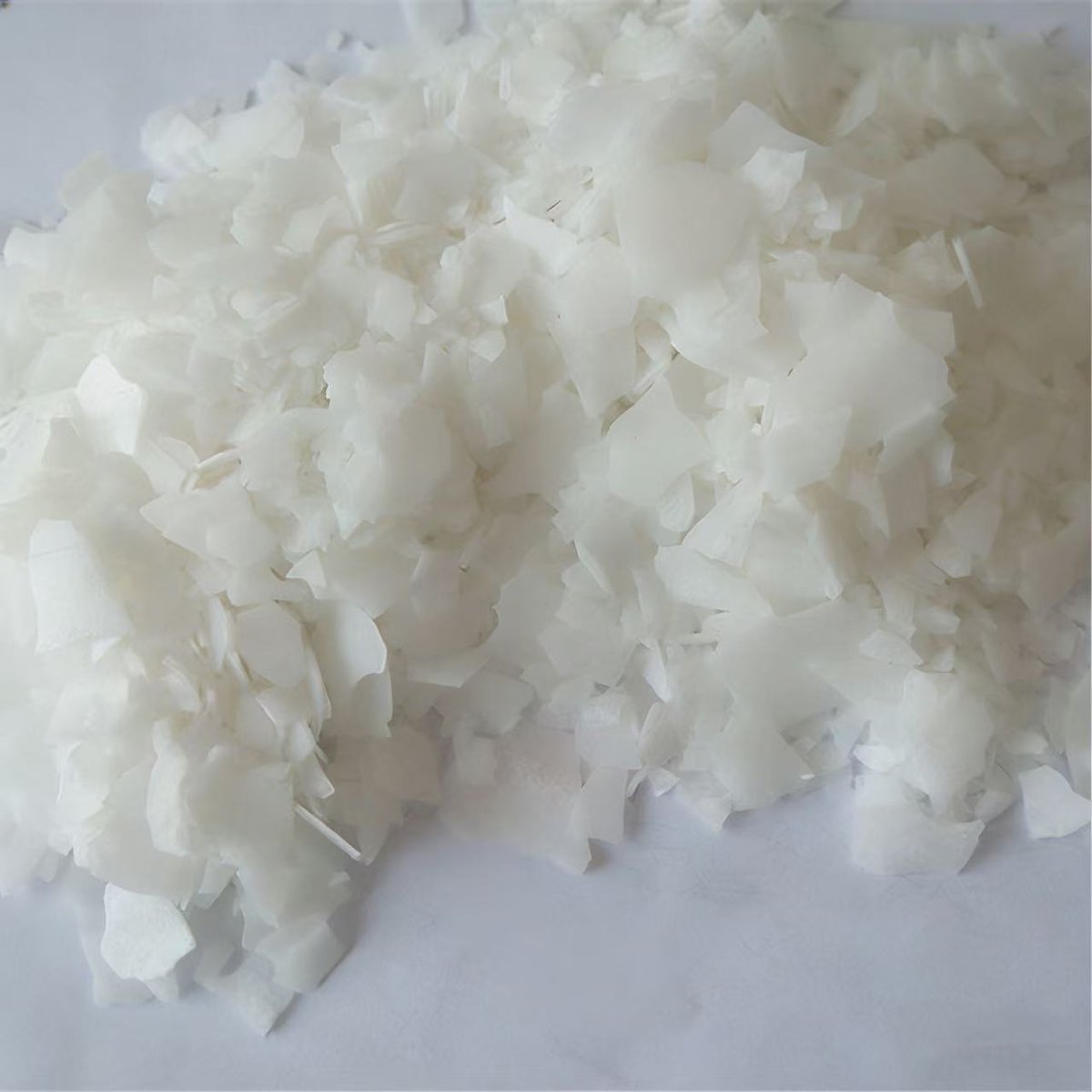
Product at a glance
- Formula
- MgCl₂·6H₂O
- CAS
- 7791-18-6
- Common forms
- Crystals, flakes, granules, or lumps; confirm the offered form
- Buyer documents
- Verify the offered grade with TDS, SDS, and a batch COA
What Is Magnesium Chloride Hexahydrate?
Magnesium chloride hexahydrate is a hydrated inorganic salt with the formula MgCl₂·6H₂O and CAS number 7791-18-6. It contains six molecules of water of crystallization for each magnesium chloride formula unit. The molecular weight is approximately 203.30 g/mol, which is useful for theoretical calculations, but industrial dosing should always be adjusted using the assay reported for the actual batch.
The material is generally supplied as white or off-white flakes, crystals, granules, or lumps. It dissolves readily in water and absorbs moisture from humid air. Magnesium chloride hexahydrate is used in magnesium-based construction materials, the production of other magnesium compounds, winter maintenance, dust control, textile processing, and a variety of industrial formulations.
Products made from different brines and purification processes can have different impurity profiles. Magnesium chloride assay, calcium, sulfate, alkali chlorides, insoluble matter, iron, color, and particle form may all influence suitability. A product name alone does not define the grade; procurement should be based on an application-specific specification and the supplier’s batch documentation.
Properties Relevant to Industrial Users
High water solubility makes magnesium chloride hexahydrate convenient for preparing process solutions. Dissolution time depends on particle size, water temperature, concentration, and agitation. Powder can dissolve rapidly but may generate dust, while flakes and granules are often easier to handle and feed. For automated equipment, flowability and caking after normal storage should be evaluated as part of the trial.
The product is hygroscopic and can cake or deliquesce when exposed to moisture. Packaging therefore needs a functional moisture barrier, not merely a strong outer bag. Humid warehouse air, damaged liners, temperature cycling, and long open-bag periods can all reduce flowability and create handling losses.
Magnesium chloride solutions contain a high concentration of chloride ions. Materials of construction, corrosion control, seals, pumps, and wastewater handling must be considered. Suitability varies with concentration, temperature, oxygen exposure, flow, and operating time. An equipment-material recommendation for one condition should not be applied automatically to another.
Heating magnesium chloride hexahydrate removes water through multiple stages. Producing high-quality low-water or anhydrous magnesium chloride is not necessarily achieved by simple open heating, because hydrolysis and formation of oxygen-containing impurities may become concerns. Customers working with molten salts, electrolysis, high-purity synthesis, or other moisture-sensitive systems should source a grade and process specifically designed for that purpose.
Major Uses of Magnesium Chloride Hexahydrate
Magnesium Oxychloride and Related Construction Materials
Magnesium chloride solution can be combined with reactive magnesium oxide in selected magnesium-based cementitious systems. The behavior of the finished material depends on magnesium oxide reactivity, solution concentration, MgO-to-MgCl₂ ratio, fillers, mixing, curing temperature, and humidity. Poorly controlled formulations may show moisture sensitivity, efflorescence, deformation, or inadequate water resistance.
The raw-material impurity profile can also affect setting, appearance, and long-term performance. Calcium, sulfate, insoluble matter, and color may be relevant depending on the product. Manufacturers should establish a controlled formulation through laboratory and pilot testing and verify that the finished construction product complies with local codes and performance requirements.
Production of Magnesium Compounds
Magnesium chloride hexahydrate is a feedstock for selected magnesium salts, magnesium hydroxide, and other magnesium-containing materials. In these applications, impurities can carry into the next reaction or increase filtration and purification requirements. Calcium, sulfate, insoluble matter, iron, and selected metals may therefore be more important than appearance alone.
The raw-material specification should be derived from the final product and process balance. If a downstream crystallization is highly sensitive to one ion, that ion should be controlled at receipt even when it is not listed in a generic sales specification. Long-term users should trend incoming results by batch to identify gradual changes before they affect production.
Deicing and Winter Maintenance
Magnesium chloride lowers the freezing point of water and may be used in solid or liquid winter-maintenance formulations. It can also be blended with other chlorides or performance additives. Effectiveness depends on pavement temperature, weather, solution concentration, application timing, and equipment calibration.
Site managers should use locally validated application rates and avoid unnecessary chloride loading. Chloride salts may affect exposed metals, concrete, roadside vegetation, soil, and drainage water. Storage areas need containment, and application programs should include runoff and asset-protection measures appropriate to the location.
Dust Control on Unpaved Roads and Work Areas
The hygroscopic behavior of magnesium chloride can help retain surface moisture and reduce airborne dust on suitable unpaved roads, haul routes, yards, and construction areas. Soil composition, grading, drainage, traffic, rainfall, and application uniformity determine the outcome.
A field trial is recommended before a large treatment. The trial should evaluate dust suppression, traction, surface condition, runoff, and maintenance interval. Operators must check local environmental requirements, especially near sensitive vegetation, groundwater, or surface water.
Textile and Process Applications
Magnesium chloride is used as a functional salt or process component in selected textile, finishing, and manufacturing formulations. Color, iron, insoluble matter, and solution clarity may be critical when the finished product is sensitive to staining, shade variation, or equipment deposits.
Other potential applications include selected ceramics, refractory products, surface-treatment systems, and specialty chemical formulations. Grade requirements differ sharply between industries. Industrial, food, pharmaceutical, and reagent grades are not interchangeable, and any regulated use must be supported by appropriate documents and approvals.
How to Select a Suitable Grade
Start with the process, not a generic purity label. A construction-material producer may prioritize consistency and the impurities that affect setting. A magnesium-compound manufacturer may need strict calcium, sulfate, iron, or metal limits. A liquid deicer producer may focus on dissolution, insoluble matter, color, and logistics. Automated feeding operations may place particle size, dust, and caking at the top of the list.
A technical specification can include:
- Magnesium chloride assay and agreed test basis
- Relevant impurity limits, such as calcium, sulfate, iron, or insoluble matter
- Physical form and particle-size distribution
- Appearance or solution-clarity requirement where relevant
- Packaging construction, net weight, and pallet configuration
- Required TDS, SDS, COA, and traceability information
- Sampling, retesting, and nonconformance procedures
The test method matters. Two laboratories can report different values if sample preparation or analytical methods differ. Contracts should identify the agreed method or reference standard for critical parameters. “Typical” data should be used for product screening, while guaranteed limits belong in the purchase specification.
Sampling and Application Validation
A representative sample should be tested before the first full order. The evaluation should reproduce actual process conditions where practical: normal water quality, target concentration, mixing, temperature, filtration, and downstream reaction. In addition to chemical results, record dissolution time, solution appearance, sediment, odor, foaming, feeding behavior, and final-product performance.
After laboratory approval, a limited commercial trial can evaluate bag integrity, caking, unloading, lot uniformity, and warehouse behavior. This staged process lowers the risk of approving a product that performs well in a small fresh sample but poorly after transport and storage.
For routine supply, define incoming-inspection frequency and retain samples from key lots. Ask the supplier to provide advance notice of changes in raw-material source, manufacturing site, process, packaging, or test method when those changes could affect performance.
Comparing Supplier Quotations
Compare offers with the same grade, test basis, packaging, Incoterm, destination, and documentation scope. Headline price per metric ton can be distorted by differences in assay, moisture, loading quantity, pallet cost, and freight. Convert the delivered price to an equivalent active-material basis when appropriate.
Total cost also includes handling loss, caking, dissolution residue, filtration, cleaning, and production variability. A consistent product with reliable packaging may cost less in use even when its initial quotation is higher. For critical operations, supply continuity, capacity, seasonal inventory, and backup logistics deserve a formal review.
A useful RFQ should state the application, critical limits, preferred form, packaging, monthly or annual volume, trial quantity, destination port, delivery schedule, labeling language, inspection terms, and documents required for customs or customer approval.
Packaging, Storage, and Handling
Store magnesium chloride hexahydrate indoors in a cool, dry, well-ventilated location. Keep bags away from rain, damp floors, leaking roofs, and condensation. Use pallets where appropriate and rotate stock on a first-in, first-out basis. Opened bags should be consumed promptly or tightly resealed.
Prevent bag damage during movement. When dissolving the product, add it at a controlled rate with adequate mixing. Personnel should follow the current SDS and use suitable eye, skin, and respiratory protection based on the task. Dust and concentrated solution may irritate the eyes or skin.
Shipping classification, labeling, customs data, and destination-country requirements should be checked for the actual product. Export documents should match the producer, grade, batch, packing, and intended market; data from a different chemical form should not be substituted.
Frequently Asked Questions
Is magnesium chloride hexahydrate the same as anhydrous magnesium chloride?
No. The hexahydrate contains six molecules of water of crystallization, while anhydrous magnesium chloride does not. Their active-content basis, physical behavior, processing, and suitable applications differ. Substitution requires recalculation and validation.
Why does the product become wet or caked?
Magnesium chloride hexahydrate absorbs moisture from the air. Humidity, condensation, weak moisture barriers, open bags, and long storage can all contribute. Proper packaging, indoor storage, and inventory rotation are essential.
Which supplier documents should a buyer request?
The core package normally includes a TDS, SDS, batch COA, packing specification, and traceability information. Application-specific certifications or third-party reports should be requested when legally or technically relevant.
Can an industrial grade be used for food, pharmaceuticals, or drinking-water treatment?
Not without explicit suitability and compliance documentation for the intended use and market. A shared chemical name does not make grades interchangeable.
Conclusion
Magnesium chloride hexahydrate is a versatile raw material whose value depends on more than MgCl₂ assay. Impurity profile, form, caking behavior, packaging, documentation, and batch consistency can directly affect process cost and product quality. Buyers who define an application-based specification, validate samples under realistic conditions, and compare total delivered cost are better positioned to secure reliable long-term supply.